
In some future time when we look back on the damage done during the Trump era we will have much to mourn: the backtracking on climate change; the damage to science, medicine, higher education, healthcare, and free inquiry; the senseless war in Iran, the colonization of Venezuela, and the attempted colonization of Cuba; the fanning of flames of racist and nativist hatred; the damage to international trade and alliances; the injuries to the trans community; the turning of the Department of Justice into the Department of Revenge; the lives lost though the suspension of foreign aid; the abandonment of Ukraine’s fight for survival; the ceaseless attempts to manipulate the electoral system; the unbridled corruption; the collusion with billionaires—the list is endless.
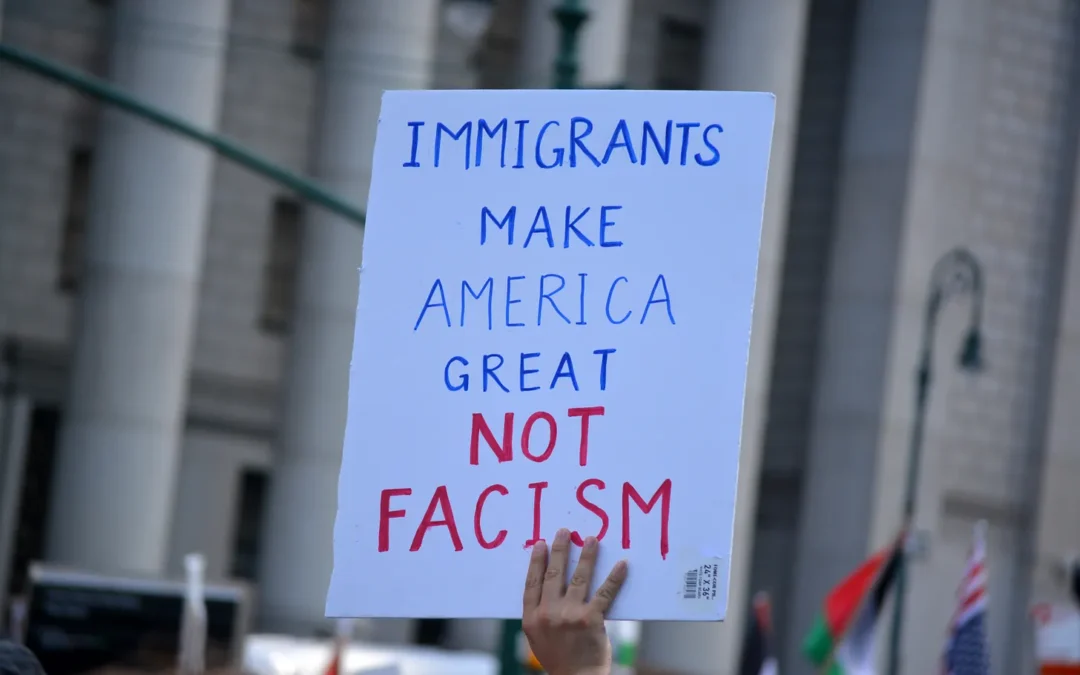
But of all of these outrages, the worst is the regime’s shameful treatment of immigrants. While the Trump regime backed off from Minnesota-type ICE invasions due to public backlash, its anti-immigrant war has intensified in less overtly visible ways. In June I wrote about how the regime makes life difficult for immigrants through a myriad of small administrative actions. I also wrote about the revocation of TPS status for Haitians. Since then, the government has made it illegal for business owners to employ Haitians removed from TPS status. This means approximately 200,000 Haitians who currently work as cooks and servers, stockers and warehouse packers, agricultural workers, retail staff, nursing assistants, delivery drivers, caregivers, security guards, factory workers, hotel cleaning staff, and property managers are being terminated from employment as we speak. It is not clear where employers will find workers to fill many of these jobs.
This month witnessed the unprovoked and unconscionable ICE murders of Lorenzo Salgado Araujo in Huston, Texas and Johan Sebastián Durán Guerrero in Biddeford, Maine. In addition, Juan Jairo Coronilla Durán died when hit by a tractor trailer while he was running from ICE agents in Florida. Duran was vacationing in Florida on a tourist visa. These deaths occurred against the backdrop of ICE’s increased arrest target of 2,000 immigrants per day. These deaths are a direct consequence of ICE/DHS agents trying to reach assigned quotas, and an ICE’s hiring spree that ignores red-flag warnings about unstable, dangerous hires. David Brouillette, the agent who murdered Johan Guerreo, had a history of hospitalizations for bipolar disorder and repeated domestic violence.
There are over 60,000 immigrants currently incarcerated in over 200 private for-profit prisons operating under ICE/DHS auspices. The New Yorker recently published an article by Jonathan Blitzer on Camp East Montana, one of the largest ICE detention facilities, managed by a company called Amentum and located at Fort Bliss, Texas. The article paints a damning portrait of conditions at Camp East Montana—but the most damning aspect is not the horrible conditions detainees are forced to live under but the fact that these conditions are horrible by design. The government deliberately makes the conditions of their detainment intolerable so that detainees will chose deportation rather than to stay a single day more. When they are deported, they are often deported to countries other than their countries of origin and face the difficulties of living undocumented lives in their new country of residence.
At Camp East Montana medications are routinely withheld from detainees with chronic illnesses, and if they repeatedly request their medication, they may be put into solitary confinement. One detainee, Lunas Campos, was sent to solitary because he complained of not getting his asthma medication. While in solitary he was beaten by the guards and died. The New Yorker article on Camp East Montana also describes a guard making a bet on which detainee will commit suicide next.
Delaney Hall is an ICE detention center run by the GEO Group in Newark, New Jersey. In May and June, hundreds of detainees initiated a hunger strike calling for release from detention, habeas corpus rights and fair legal reviews, and the end to coercive tactics that force detainees to accept deportation. Authorities met the hunger strikers with physical force and tear gas, and hundreds of detainees were transferred to detention centers in Colorado, Arizona, New Mexico, Texas, Louisiana, Mississippi, and Pennsylvania, thereby ending the strike. Conditions in Delaney Hall are similar to those in Camp East Montana with sub-standard food, systematic medical neglect, verbally and physically aggressive guards, and lack of basic supplies. The New Jersey Attorney General has sued the GEO Group for refusing to allow state health inspectors into the facility and Jersey City pulled its funds from Citizen’s Bank over their financial assistance to GEO Group.
Activists all over the country have been protesting Citizen’s Bank demanding it cut financial assistance to GEO Group and CoreCivic, two of the biggest managers of ICE detention facilities. Last week Citizen’s Bank just announced it would no longer do so— they would stop helping the firms get financing because the federal government would finance the detention centers instead though federal tax dollars.
Let’s also note that in 2025 the Buddhist Coalition for Democracy was party to two amicus curiae briefs advocating the release of Mohsen Mahdawi and Mahmoud Khalil, two Columbia University students of Palestinian origin. Both had been arrested and were awaiting deportation for engaging in pro-Palestinian demonstrations on campus. In both cases, district court judges ruled their arrests illegal and released them from prison. Now, in separate Circuit and Appellate Court rulings, these initial judicial decisions have been overturned, and Mahdawi and Khalil both face re-arrest and deportation while awaiting immigration court rulings. This week Khalil filed a civil rights lawsuit against the federal government as he continues to fight to stay in the United States.
Finally, let’s just note the racist and nativist animus that underlies the regime’s actions. No further proof is needed than the fact that ninety-nine percent of all refugees admitted to the U.S. in 2026 have been white South Africans.
It’s true that those of us who are repulsed by the regime’s cruel and inhumane policies do not yet have the power to stop an armed federal government intent on carrying them out.
But that doesn’t mean there’s nothing we can do.
We can continue to demonstrate at ICE facilities. While the federal government does all it can to prosecute demonstrators at ICE facilities, the New York Times reports that of over 400 legal cases resolved so far, “nearly half have unraveled: Juries acquitted defendants, judges threw out charges, or prosecutors withdrew them.”
We can get trained on how to accompany immigrants when they go to their hearings. We can help provide necessities to local immigrant communities when they fear going to work or to the grocery. We can insist that midterm candidates support either the abolition of ICE, limiting ICE/DHS funding, or demanding significant reform. We can donate money to legal organizations that represent detainees in court (the Buddhist Coalition for Democracy donated over $5,000 to the National Immigration Project last year). We can advocate against our local police departments signing 287(g) agreements with ICE. We can talk with our friends, families, and neighbors to help shape public opinion as we await the midterms. Finally, when the Democrats retake the House of Representatives in November, we must continue our demands that they take action against ICE/DHS through hearings and appropriations.