
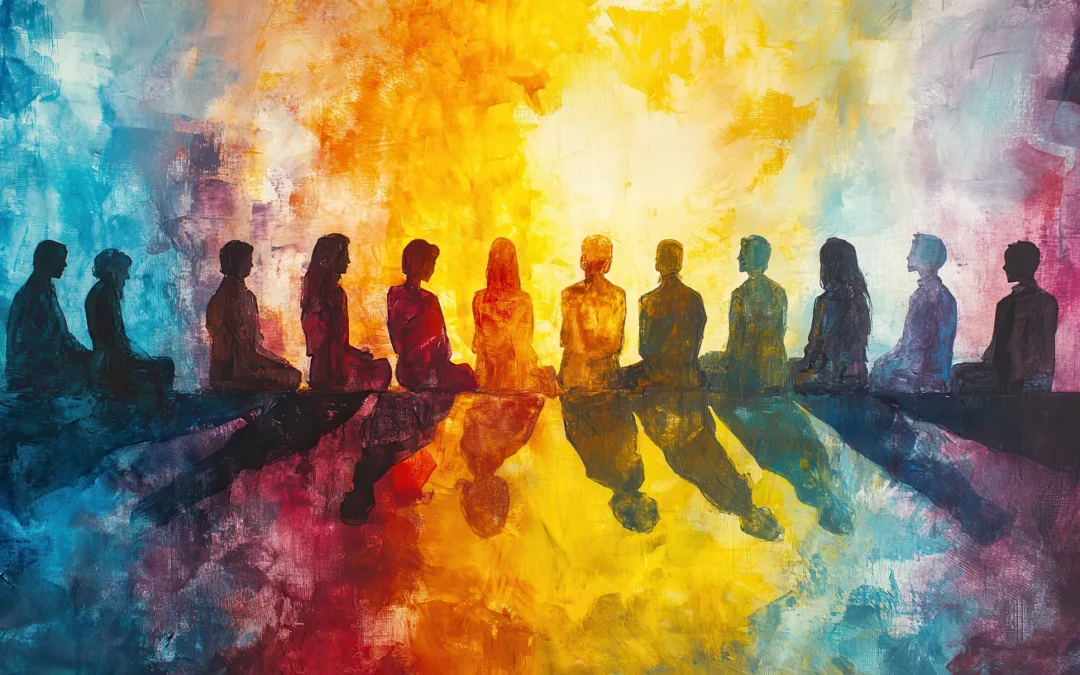
For nearly a year, a small group has gathered each Wednesday through the Buddhist Coalition for Democracy and merged with the Reflective Meditation daily online sangha. We meditate together, but we don’t meditate away from the world. We bring the world into practice.
Each week begins with a reflection—a current event, a Buddhist teaching, a question that has been forming from my own reactions to this time in history. Sometimes it’s trust, sometimes courage, moral outrage, disillusionment, identity, democracy, religion, or truth. The topic changes, but what happens next is remarkably consistent.
We meditate each in our own Zoom squares. We turn the cameras off for privacy to do the practice of our choice. We may contemplate the prompt, we may follow the breath, we may notice body sensations. We may feel deeply. All this, and more, may be included in meditation.
Then each person reflects on the meditation through the lens of their own experience.
When we come together for conversation, rather than debating ideas or persuading one another, we become curious. We notice how an issue is living with us. We discover connections to our own history, our relationships, our hopes, and our fears. We often leave with a slightly different perspective than the one we arrived with—not because someone convinced us, but because the meditation and the listening created enough space for something new to emerge.
A few of our recent topics:
Disillusionment
“Disillusionment literally means an illusion has been removed.”
That week’s conversation wasn’t about becoming cynical. It was about asking whether disappointment can become a doorway to clearer seeing rather than resignation.
July 4th
As Independence Day approached, we explored how to hold “love of country” alongside an honest reckoning with its history. Inspired by Eddie Glaude’s reflections on democracy and the idea of post-traumatic growth, we asked whether nations, like individuals, can mature through suffering. Rather than arriving at a shared conclusion, we reflected on what this moment asks of each of us.
Moral Outrage
When we explored moral outrage, one person noticed it changed depending on who they were with. Another paid attention to how it felt in the body. Someone else wondered whether today’s outrage touched older wounds.
None of these observations answered whether outrage was right or wrong. They helped us understand how each of us carries it.
Anatta
The Buddhist teaching of not-self became surprisingly political.
What happens when we reduce people to labels—liberal, conservative, MAGA, progressive?
Most of us know what it feels like to be misunderstood. Remembering that feeling can soften certainty and reopen curiosity.
Courage
One week we reflected on courage as “action in the face of fear.”
That shifted our conversation away from trying not to be afraid. Instead we wondered whether sangha itself helps us remain courageous enough to stay engaged.
Trust and Truth
Most recently we reflected on the relationship between trust and truth. Can facts alone create trust?
Several people shared experiences of institutions they had lost confidence in. Others spoke about rebuilding trust—not through certainty, but through relationship, questioning, and listening.
Over time I’ve realized that our Wednesday practice is about learning how to think, feel, and act with greater awareness while living in a democracy. We begin to recognize that none of us sees the whole picture, and yet each person’s experience contributes something essential. We rarely leave with answers. We leave with questions and reflections, greater kindness toward ourselves and one another, and sometimes a little more clarity about what action is ours to take.
The BCD On-Line Meditation is facilitated by Dharma teacher Linda Modaro. It Meets Wednesdays at noon. To join, click here.